OUR SERVICES
T-Group Energy Solution provides comprehensive industrial and plant engineering services, from design to commissioning, in the Energy and Oil & Gas sectors. Our strength lies in our multidisciplinary engineering expertise, which enables us to develop reliable, efficient solutions that are optimized in terms of time and cost.
Thanks to an international network of suppliers, we select technologically advanced components and manage the supply chain in a competitive and sustainable manner. Our technical team handles the construction, assembly, testing, and commissioning of plants, including civil works, power plants, and balance of plant (BOP), ensuring professionalism, quality, and safety at every stage of the project.

Handling and relocation of power generation plants
Relocation of plants
Safe and accurate transfer of individual components of power generation plants, maintaining technical specifications and minimizing production downtime.
Transfer of complete generation and cogeneration lines
Disassembly, transport, and reassembly of electrical or cogeneration production lines, preserving connections, control systems, and plant integrity.
Complete relocation of plants and departments
Complete relocation of plants and operational areas, with interventions planned to minimize disruption to production activities.
Handling and relocation of power generation plants
Relocation of plants
Safe and accurate transfer of individual components of power generation plants, maintaining technical specifications and minimizing production downtime.
Transfer of complete generation and cogeneration lines
Disassembly, transport, and reassembly of electrical or cogeneration production lines, preserving connections, control systems, and plant integrity.
Complete relocation of plants and departments
Complete relocation of plants and operational areas, with interventions planned to minimize disruption to production activities.
Construction, installation, and assembly
Construction of turnkey energy plants
Complete project management, from foundation to start-up.
Disassembly and assembly
Safe interventions that comply with technical requirements, even in complex spatial conditions.
Electromechanical installations
Integrated electrical connections and automation systems to ensure operational efficiency.
Logistics and specialized handling
Loading, unloading, and protective packaging
Advanced packaging techniques for long-distance transport of sensitive components.
Special and oversized transport
Advanced packaging techniques for long-distance transport of sensitive components.
Engineering and design support
Project management and technical supervision
Planning, coordination, and control of the design and execution phases.
Outsourcing of qualified engineers
Provision of specialized personnel for technical and coordination activities.
Engineering consulting
Technical consulting to optimize design, processes, and regulatory compliance.

Auxiliary activities and additional services
Decommissioning and dismantling of plants
Controlled removal of obsolete machines with safety protocols.
Packaging and equipment protection
Technical packaging to preserve integrity and functionality during storage and transfer.
Sourcing spare parts
Fast and reliable supply of components and spare parts for gas generation and cogeneration plants, as well as for wind turbines, thanks to a consolidated network of international suppliers and transfer.
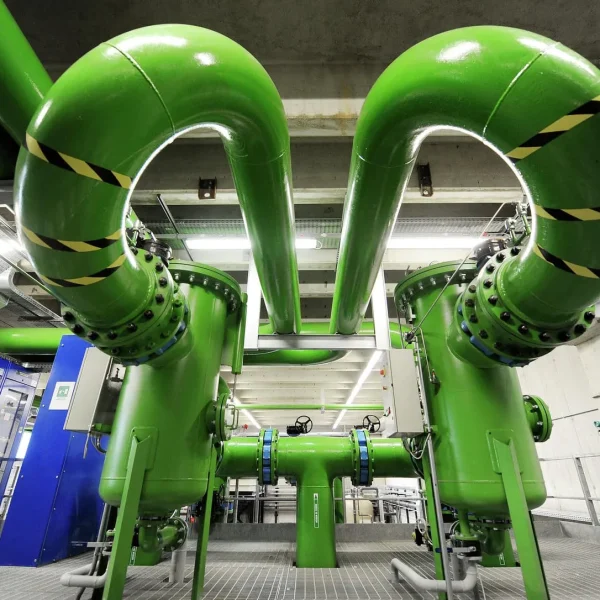
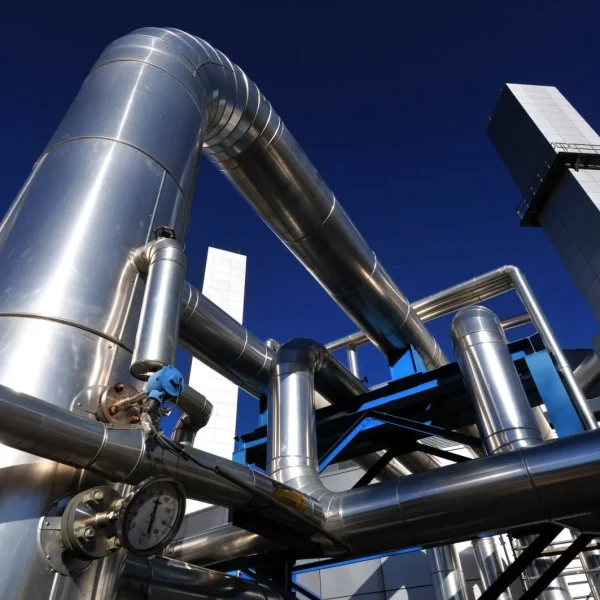
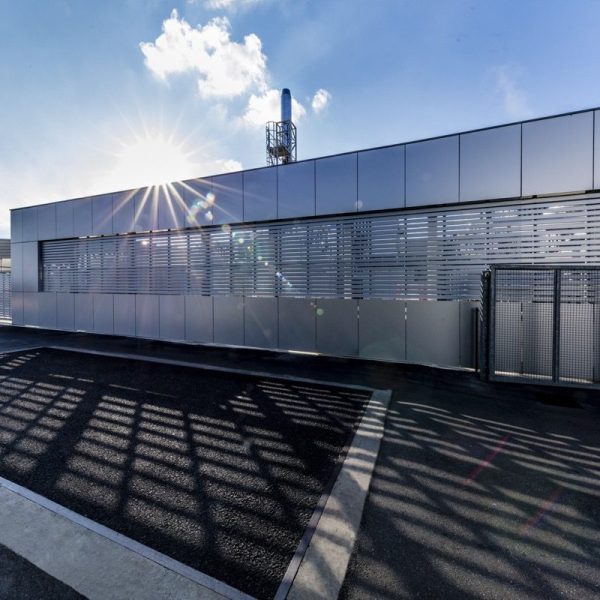
Cogeneration and Trigeneration Plants
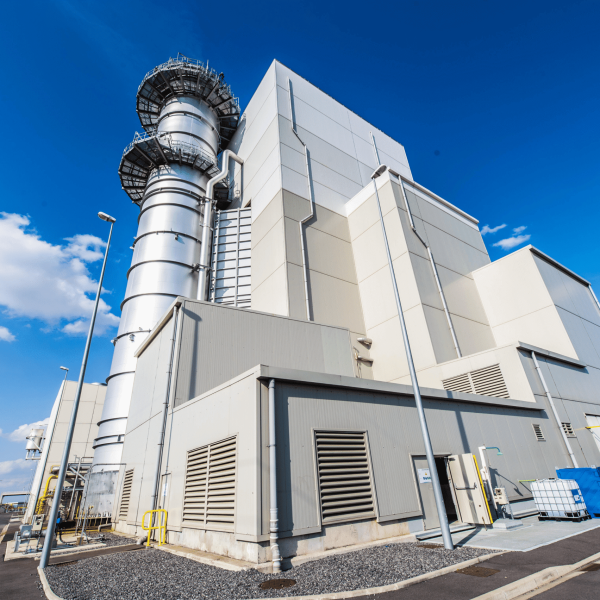
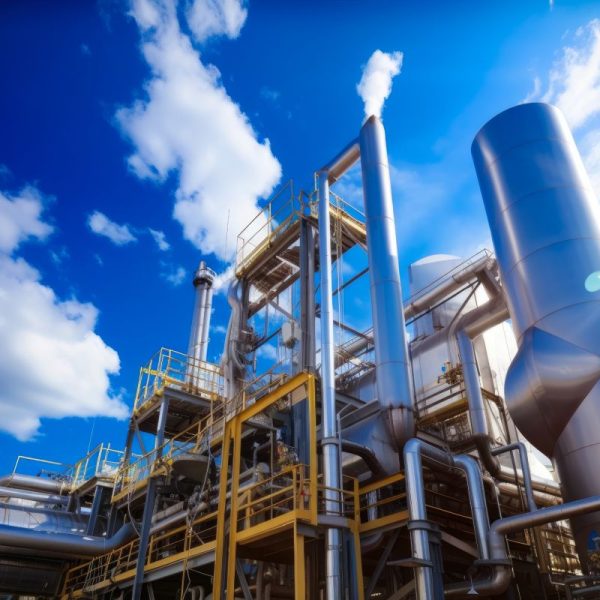
Micro-cogeneration systems have capacities up to 50 kW, while mini-cogeneration systems range from 50 kW to 1 MW.
Trigeneration expands the cogeneration principle, allowing not only the production of electricity and heat but also the generation of cold air or chilled water.
Cogeneration enables simultaneous production of electrical energy and heat in one process, reducing fuel consumption and providing significant cost savings, as well as decreasing environmental impact.
The heat that is usually lost during electricity generation is recovered and used for heating.
Trigeneration develops this approach: part of the residual heat is used to produce cooling energy, which also satisfies cooling demands.
We design customized cogeneration systems tailored to the real needs of each business to optimize plant operation and maximize all sources of energy flexibility.
Both technologies provide the end client with:
Increased energy availability
Reduced energy costs
Reduced CO₂ emissions
Today, cogeneration is applied both in the industrial sector, especially for autonomous production, and in the civil sector.
Thermal energy (steam, hot/superheated water, or hot air) can be used in industrial processes or, in the civil sector, for district heating through heat supply networks.
Electrical energy can be consumed on-site or fed into the distribution grid.
— Energy
Planning Meets Innovation
Cogeneration generates electricity and heat simultaneously, while trigeneration also adds the production of cooling energy. Both make use of waste heat to maximize system efficiency. The main difference is that trigeneration uses absorption chillers that convert heat into chilled water, thus providing a third energy vector.
01
Cogeneration
It produces electricity and heat at the same time using a single primary energy source. It recovers waste heat from the electrical process and transforms it into useful thermal energy. This increases overall efficiency and reduces costs compared to the separate production of the two energy sources.
02
Trigeneration
It simultaneously produces electricity, heat, and cooling. It extends cogeneration by using waste heat to power absorption units that generate cold water or air. It offers very high efficiency, often over 90%, and is ideal where both heat and cooling are needed, such as in industrial plants and air-conditioned buildings.
Comparisons and differences
Energy efficiency has become a priority for many companies—not only to reduce operating costs, but also to support sustainable development and respond to growing regulatory and market pressures related to decarbonization.
In a context where energy accounts for an increasingly significant share of expenses, adopting solutions that optimize consumption and maximize plant productivity becomes a strategic competitiveness factor.
The two most modern and effective technologies for improving energy efficiency are cogeneration and trigeneration, both based on the combined production of heat and electricity but with different characteristics and fields of application.
While cogeneration enables the simultaneous production of electricity and heat, trigeneration expands this process by also generating cooling energy, making it particularly useful in sectors with high cooling demands.
L’efficienza energetica è diventata una priorità per molte aziende, non solo per ridurre i costi operativi, ma anche per favorire lo sviluppo sostenibile e rispondere alle crescenti pressioni normative e di mercato legate alla decarbonizzazione.
In un contesto in cui l’energia rappresenta una quota sempre più rilevante dei costi, adottare soluzioni che ottimizzano i consumi e massimizzano la produttività degli impianti diventa un fattore strategico di competitività.
Le due tecnologie più moderne ed efficaci per migliorare l’efficienza energetica sono la cogenerazione e la trigenerazione, entrambe basate sulla produzione combinata di calore ed energia elettrica, ma con caratteristiche e ambiti di applicazione differenti.
Mentre la cogenerazione consente la produzione simultanea di elettricità e calore, la trigenerazione amplia questo processo includendo anche la produzione di energia frigorifera, risultando particolarmente utile nei settori con elevate esigenze di raffreddamento.
Cogeneration
What is cogeneration and how does it work?
Cogeneration (also known as combined heat and power – CHP) is an advanced technology that allows the simultaneous generation of electricity and heat from a single fuel source.
Unlike traditional systems that produce electricity and heat separately with significant energy losses, cogeneration optimizes the use of primary energy, improving overall efficiency and reducing environmental impact.
Cogeneration plants can operate on different types of fuel, including natural gas, biogas, biomethane and hydrogen, making them versatile solutions for industrial, commercial and residential sectors.
The possibility of using renewable or alternative energy sources supports the transition towards a more sustainable, low-carbon energy system.
How does cogeneration work?
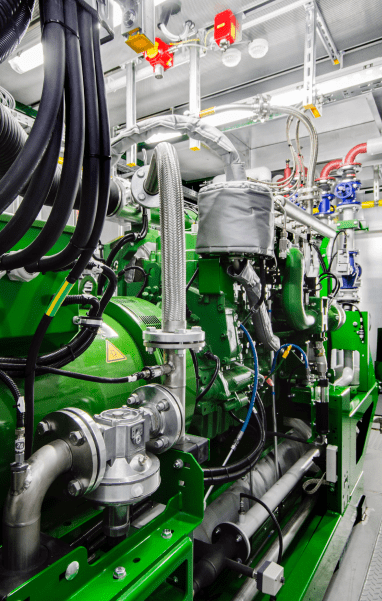
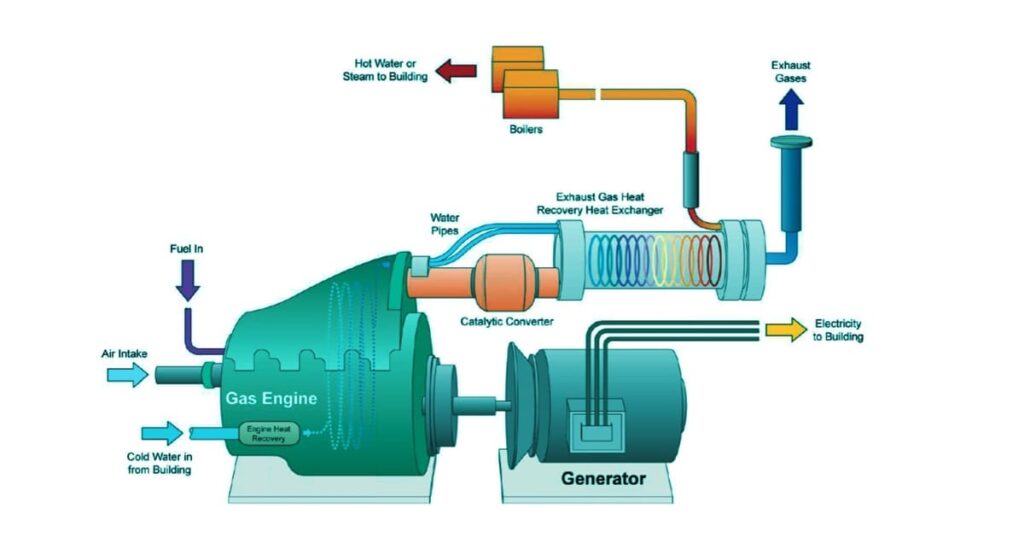
The heart of a cogeneration plant is a primary engine, which can be an internal combustion engine, a gas turbine or a microturbine.
The process begins with the combustion of the fuel in the engine, which produces mechanical energy that is transformed into electrical energy through an alternating current generator.
The heat generated during combustion, which in a traditional system would be dispersed, is recovered through a heat exchanger and used for heating spaces, producing hot water for domestic use, or supplying industrial processes.
This ability to recover residual heat makes cogeneration much more efficient than traditional systems, where most of the energy is lost in the form of heat dispersed in exhaust gases or in cooling circuits.
Advantages of cogeneration
The implementation of cogeneration offers numerous benefits in terms of energy efficiency, reduction of operating costs and environmental impact:
Greater energy efficiency:
Cogeneration plants reach an overall efficiency higher than 85%, compared to the 40–50% of traditional solutions that produce electricity and heat separately. This allows for a more effective use of primary energy, reducing waste and improving overall sustainability.
Reduction of CO₂ emissions:
Thanks to the high efficiency in the use of fuel, the plants can reduce CO₂ emissions by 30–40% compared to conventional systems. The use of biogas or green hydrogen can bring the plant close to carbon neutrality, ideal for companies committed to the energy transition.
Savings on energy costs:
On-site production of electricity and heat recovery allow companies to reduce dependence on the grid and cut energy expenses. The return on investment (ROI) ranges from 3 to 7 years, depending on size, fuel cost and available incentives.
Independence and reliability:
The plants guarantee a stable and continuous energy supply, reducing the risk of interruptions caused by blackouts or grid instability. This is crucial for critical sectors such as hospitals, industries, shopping centers and hospitality facilities.
Access to incentives and benefits:
In many European countries, including Italy, high-efficiency cogeneration benefits from white certificates (TEE), tax breaks and subsidized financing to promote sustainable energy solutions.
Application flexibility:
Cogeneration is suitable for various sectors, including manufacturing industry, healthcare facilities, hotels, wellness centers and commercial buildings.
Thanks to its versatility, cogeneration represents one of the most efficient and sustainable technologies for energy production, with tangible advantages for both businesses and communities.
Trigeneration
What is trigeneration and how does it work?
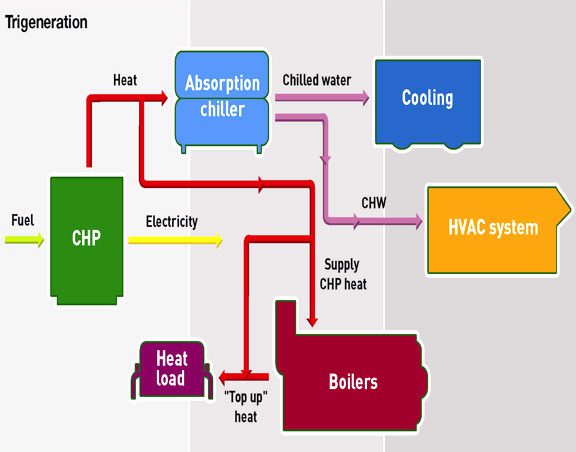
Trigeneration (CCHP – combined cooling, heating and power production) represents an evolution of cogeneration, capable of producing not only electricity and heat, but also cooling for the refrigeration of spaces and industrial processes.
This technology exploits primary energy even more efficiently, transforming the residual heat into chilled water that can be used in different sectors.
The main advantage of trigeneration is its ability to maximize overall energy efficiency, which can exceed 90%.
This allows companies to reduce the consumption of electrical energy for cooling and to cut operational energy costs, while at the same time improving the sustainability of production processes.
How does trigeneration work?
Trigeneration combines a cogeneration plant with an absorber, a device that uses residual heat to produce chilled water, thus reducing the need for electric cooling systems.
The process is based on the absorption cycle, a technology that uses lithium bromide or ammonia as a refrigerant to transform heat into cooling energy.
This method differs from traditional electric cooling systems, lowering the overall energy consumption of the plant.
Main phases of trigeneration operation:
Production of electrical energy:
The internal combustion engine or the gas turbine generates electrical energy, which can be used by the company or fed into the grid.
Heat recovery:
The residual heat produced by the engine is recovered through a heat exchanger and used for space heating, the production of hot water or industrial processes.
Conversion of heat into cooling energy:
Thanks to the absorber, a part of the recovered heat is transformed into chilled water, which can be used for air conditioning or for cooling specific industrial processes.
This ability to generate electrical, thermal and cooling energy simultaneously makes trigeneration the ideal solution for companies that require a diversified and continuous energy supply throughout the year.
Advantages of trigeneration
The adoption of trigeneration offers numerous advantages compared to traditional cogeneration, especially for companies with cooling needs:
Production of cooling without the use of electricity:
The use of residual heat to produce chilled water significantly reduces the electrical consumption related to traditional cooling systems, leading to important energy savings and a lower dependence on the electrical grid, with a consequent reduction in operating costs.
Ideal for companies with constant cooling demand:
Trigeneration is particularly advantageous for industries and commercial facilities that need cooling energy for their processes, such as the food industry (cooling of products and warehouses), the pharmaceutical sector (controlled temperature for the production and storage of medicines), hospitals and healthcare facilities (critical cooling for operating rooms and laboratories), and data centers (continuous cooling for the proper functioning of servers).
Optimization of consumption and increase in efficiency:
With an efficiency that can exceed 90%, trigeneration allows maximum use of primary energy, optimizing resource management and reducing energy losses.
Lower environmental impact:
The intelligent use of residual heat reduces CO₂ emissions and the environmental impact of the company. If the plant runs on biogas or hydrogen, trigeneration becomes even more sustainable, supporting the energy transition and the decarbonization of production processes.
Reduction of operating costs:
By eliminating or reducing the use of electric chillers, trigeneration allows energy costs to be lowered, increasing profitability and shortening the payback time.
Adaptability and flexibility:
Trigeneration systems can be configured according to specific company needs, modulating the production of electrical, thermal and cooling energy based on real requirements.
Cogeneration or trigeneration: which to choose?
The choice between cogeneration and trigeneration depends on the company’s energy needs, the type of production processes, and the balance between electricity, heat, and cooling demand. Both solutions offer significant advantages in terms of energy efficiency, emissions reduction, and operating cost savings, but it is essential to assess which technology best fits the specific energy consumption profile.
Cogeneration:
It is the ideal solution for companies that primarily need electricity and heat, without a constant cooling demand. It is particularly suited for industrial and tertiary sectors with high thermal energy consumption, such as manufacturing plants, hospitals, hospitality facilities, and businesses requiring hot water or process heat. With efficiency up to 85%, cogeneration reduces energy consumption and increases system autonomy, decreasing dependence on the electrical grid and external heat suppliers.
Trigeneration:
It is an evolution of cogeneration that also integrates the production of cooling energy, making it a strategic choice for companies with high cooling demands in addition to electricity and heat. It is particularly advantageous in sectors such as the food and pharmaceutical industries, hospitals, data centers, airports, and shopping centers, where maintaining controlled temperatures is essential for production processes, storage, or environmental comfort. Trigeneration efficiency can exceed 90%, further optimizing the use of primary energy and reducing costs associated with traditional cooling systems, which are often highly energy-intensive.Initial investments:
Cogeneration generally involves lower installation costs compared to trigeneration, making it more accessible for companies with high heat consumption but limited cooling needs. Conversely, trigeneration requires higher investments due to the integration of an absorption chiller for cooling energy production. However, if the cooling demand is constant and significant, trigeneration offers a faster return on investment by reducing or eliminating the use of electric chillers, which heavily impact energy costs.